5

Walter Koenig Calls His Star Trek More Human Than JJ Abrams’ Reboot

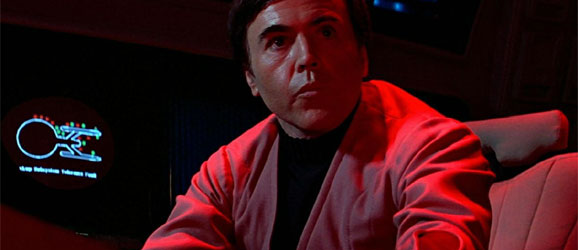
Walter Koenig is a Star Trek icon. He, of course, played Pavel Chekov on Star Trek: The Original Series for three years and a long string of Star Trek movies in the late 70s and throughout the 80s. He recently headed up north for the 20th annual Vulcan Spock Days in the Vulcan Country in Alberta, Canada.

Vulcan Spock Days is an annual summer gathering of Star Trek fans in the rural county of Vulcan. The people of Vulcan, for the past 20 years, have converted their county into a safe haven for all things Star Trek. Their Vulcan Spock Days is one of the biggest tourist events for this small Canadian county.

In an interview with the Vulcan Advocate, Walter Koening spoke about the importance of fan conventions to Star Trek’s legacy.

“What I do, it’s generally for the public or involves the public. If they’re not interested or enthusiastic about my contributions, then I’m not going to get much work! The fans have always been there — they’ve been an extraordinary avenue of reinforcement and affection.

Koening also took the opportunity to talk about the new Star Trek series of movies by director J.J. Abrams. Most notably, he discussed his opinion on actor Anton Yelchin, who plays Pavel Chekov, the role made famous by Walter Koening.

But I found myself just sitting back and becoming a Star Trek fan… I was just watching another actor playing a character… I just thoroughly enjoyed what he did. I think it was fun that he did a little of the (Chekov) accent. That was sort of like a little homage, which I appreciated,” he said, adding that he enjoyed the film.

Lastly, Walter Koening spoke on the differences in the earlier Star Trek movies to the new versions. He mostly talked about the differences in special effects and the overall emotional tie he has to the early films.

The (new Star Trek) film is evocative of this time, in terms of technology that is available. The different way of making films — a lot more CGI, a lot more eye candy, a lot more dependence on technology than we had… I think possibly we were compelled to make the story a little bit more personal and a little bit more human and a little bit more character-driven because we did not have the technology to fall back on.

It was not a visual, sensory experience,” he said of the climax of The Wrath of Khan. “It was a very emotional ending — the death of Spock, Kirk’s reaction, all of that. It was devastating and left you with something more than you’ve got when leaving the new Star Trek movie.

Comments

  • Richard

    Hard to argue with that last comment from Walter. Star Trek has never really been about the technology. Even Roddenberry didn’t want technology to be the focus of what ST was about. He wanted the high-tech devices used in the TV show to be easily identifiable to an audience without having to sit there and explain what it was or what it did (which is boring as hell if you’ve ever watched early ’40s or ’50s B&W sci-fi flicks to any great extent). One of the reasons ST flamed out on TV is because they began to rely on deus ex machina devices to resolve plots and tons of techno-speak to move the plot along instead of concentrating on the characters. Ron Moore learned those lessons well, and they showed when he created the new Battlestar Galactica, a show that only touched technology when it was absolutely necessary and concentrated on characters, plot, and philosophy. Star Trek needs to get back to that VERY badly if it wants to remain relevant.

  • http://www.facebook.com/faissal.halim Faissal aka Md. Halim

    Well, of course, the original Star Trek works (as well as the later
    pieces, including the TV series, all the way to Deep Space 9, and even
    Star Trek Enterprise) were more human than what JJ Abrams has done with
    his Star Trek contributions.
    When I watched JJ Abrams’ first Star Trek movie I kept waiting for that
    moment when there is something classically sci-fi, in that a semblance
    of science (well, pseudo science, if you want to nit pick, which is fine
    with me) is used to bring up something truly human, and at the end of
    the movie I left the theater with a feeling of emptiness, given that I
    did not learn anything, I did not find any possible flaws in myself that
    I need to check, I did not find anything deep to reflect on, I did not
    find anything of deep impact on the human condition. The movie was just
    show and flair. Nothing human, nothing memorable. Even a 40 minute
    episode of “Star Trek: TNG” once made me reflect upon my own life, when
    Miles O’Brien said something along the lines of “It’s not you that I
    hate, Cardassian — it’s what I have become because of you.”; even a few
    minutes’ segment from Deep Space 9 made me wonder if I am truly as
    welcoming to people of varying ethnicities as I like to think I am, when
    the characters were talking about a species with a transparent skull –
    and as a New Yorker I like to think that I have met people of every
    ethnicity, and that I am nice to everyone, but those few minutes
    troubled me, and made me wonder if I am truly as nice a guy as i would
    like myself to be. When I watched JJ Abrams’ first Start Trek movie,
    however, despite the movie’s being so much longer than any single Star
    Trek episode,I truly found absolutely nothing of value throughout the
    entire movie, and i felt that the movie was in the league of cheap
    sci-fi movies, in that they only show technology and pseudo science,
    rather than the genre of writing used by Jules Verne; and I felt that
    the movie was a slap in the face of the Star Trek franchise, in
    particular. Just my thoughts.

    • bhak1

      TNG is my favorite Trek by far and I personally feel that it goes above and beyond nearly any other form of media in making you reflect on the meaning of life time and time again. I thought Abrams film was fun and certainly had it’s highlights and I probably prefer it over DS9 and VOY, but it can never live up to TNG. It’s a completely different style and that’s ok.

  • Jim

    Walter Keonig was only in Seasons 2 and 3. He was not in the first season. Someone needs to check their Trek facts.

  • bhak1

    I agree but I wouldn’t say that the 2009 film is devoid of emotion. I thought the scene when Kirk is born as his father is talking to his mother over the intercom and he’s about to die was pretty damn moving