Star Trek: Voyager’s Best Episode
"Equinox" isn’t just Star Trek: Voyager’s best episode, it’s one of the show’s most haunting adventures, a brief glimpse into what Voyager might have been.
Previously on Star Trek: Voyager, the last Star Trek series to last a full seven seasons (so far) went off the air in 2001. It left behind a wealth of unrealized potential, potential which shined brightest in the show’s best episode.
And now, Star Trek: Voyager‘s best episode, “Equinox”…
Five years ago the Federation starship Voyager was suddenly and unexpectedly stranded in a remote part of the galaxy by an entity called the Caretaker. The journey home will take them seventy years, but they set a course for Earth anyway, determined to stick to the Starfleet principles which made them who they are.
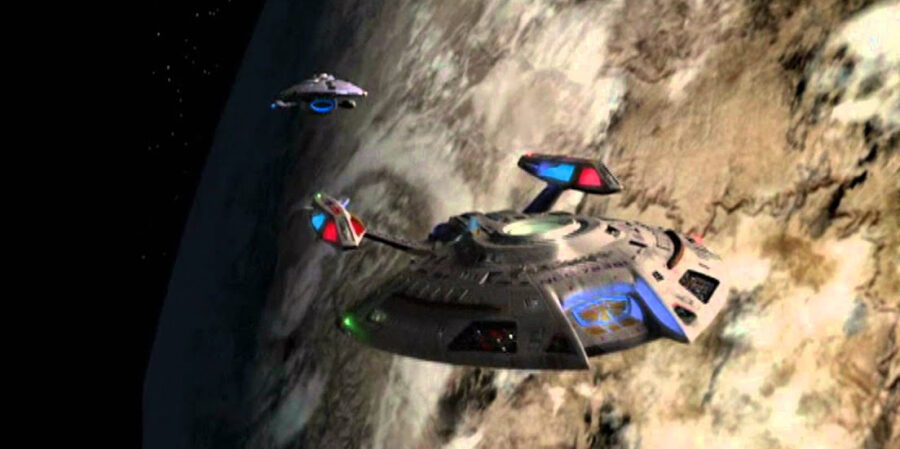
Unbeknownst to the crew of Voyager, they weren’t the only Starfleet vessel stranded by the Caretaker. Another Federation ship, the Equinox, was also stranded and headed for home. But they chose a very different way to get there.
Star Trek: Voyager’s best episode, “Equinox”, begins when after years of struggling their way through unknown and hostile space, Voyager encounters another Federation ship, the first they’ve seen in their five years of journeying towards home.
The Equinox hasn’t fared as well. Constantly under attack by mysterious alien forces, the ship is a shambles. Voyager’s crew searches the ailing ship for survivors, and finds a man who’s been buried under rubble for two days. “Tell me if my legs are still there,” he gasps from somewhere in the smoky darkness.
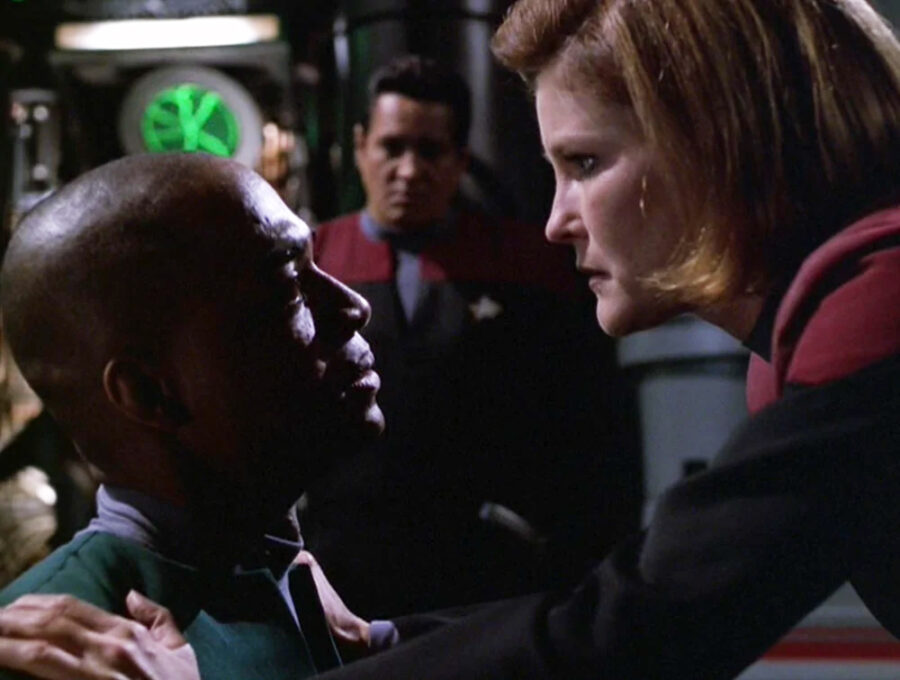
Another crewman leaps out of the wreckage into the flickering light and begins firing wildly in all directions, screaming about invaders which aren’t there, before collapsing in a heap. Most of the Equinox’s crew is dead and the rest are found inside unconscious, incapacitated, and so damaged by their experience that they’re nearly catatonic.
The Equinox’s Captain, a once highly regarded Starfleet officer named Rudolph Ransom (played perfectly by guest star John Savage), tells Voyager’s Captain Janeway (Kate Mulgrew) that they don’t know why they’re being targeted. The truth is something different, and altogether more terrible.
Equinox Is What Every Episode Of Voyager Should Have Been
“Equinox” is the story of what might have been, the tale of what Star Trek: Voyager could have become, had things gone differently. While Voyager has stuck to all the rules and regulations of being a Starfleet ship, Ransom’s crew has abandoned not only the rules, but any semblance of morality as well.
Discovering that strange creatures from another dimension can be sucked into our world, murdered, and converted into a super-fuel they’ve been hard at work slaughtering this alien species and using them for propulsion.
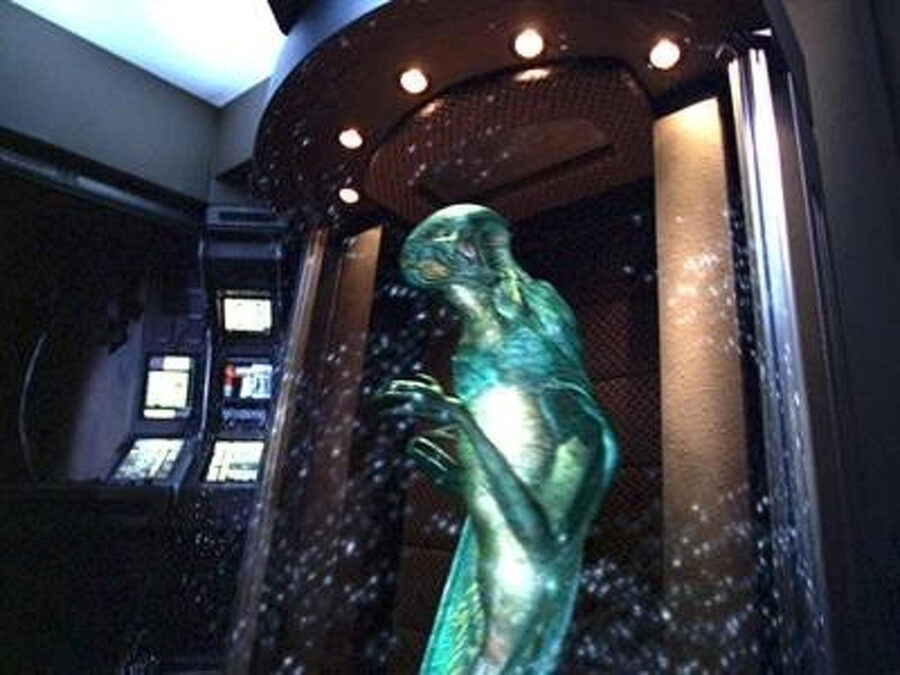
Ransom pleads for leniency, claiming their situation was desperate. They were starving, dying, doomed. He doesn’t think they had a choice, but no one on Voyager’s buying it. Janeway attempts to place them all under arrest, but things only get worse.
The surviving Equinox crew escapes, damages Voyager, and leaves them at the mercy of the now hellbent for vengeance alien creatures they’ve been systematically slaughtering.
Kate Mulgrew Delivers Her Best Star Trek Performance As Janeway
And then Janeway gets pissed. Over the course of a Star Trek: Voyager two-part episode she tries to kill an Equinox crewman to extract information, risks the life of her own people in her quest to catch and stop Ransom, and eventually relieves her own first officer of duty when he disobeys orders to stop her from committing murder.
Kate Mulgrew is more engaged here than she is at almost any other time in the show, and the rest of the cast is working from a brilliant script which gives them all a place to shine.
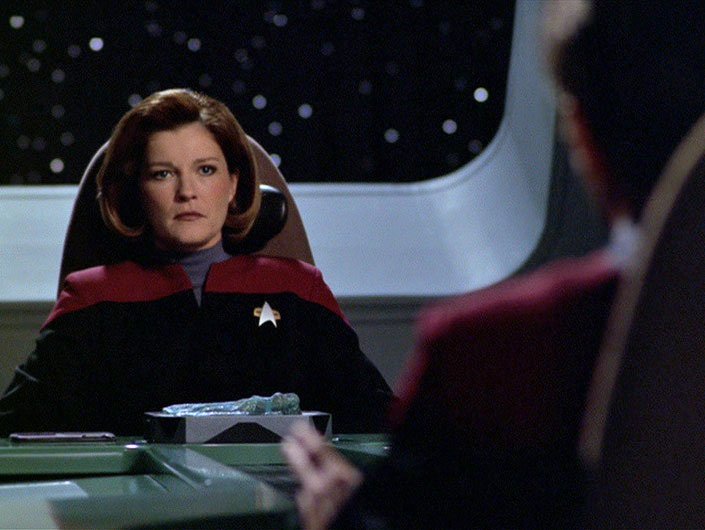
For one two-part episode, Janeway becomes the take no prisoners commander Star Trek: Voyager fans always wanted. For a few brief moments she’s Captain Kirk with a chip on his shoulder, a phaser-toting vengeance dealer who will stop at nothing to see Ransom’s reign of terror ended. It’s Janeway at her very best, but that’s far from the episode’s only source of greatness.
The Doctor And Seven Sing In Voyager’s Best Episode
Within the primary “Equinox” story are smaller ones which impact the larger tale, each of them utterly brilliant. The best involves Seven (Jeri Ryan) and The Doctor (Robert Picardo), pupil and teacher, held prisoner aboard Captain Ransom’s ship.
Desperate to extract information, Ransom rewrites the Doctor’s program to turn him into a sadistic mad scientist, instead of healer. With Seven on his table, The Doctor beings to dig into her brain, through a series of sick procedures which will kill his friend.
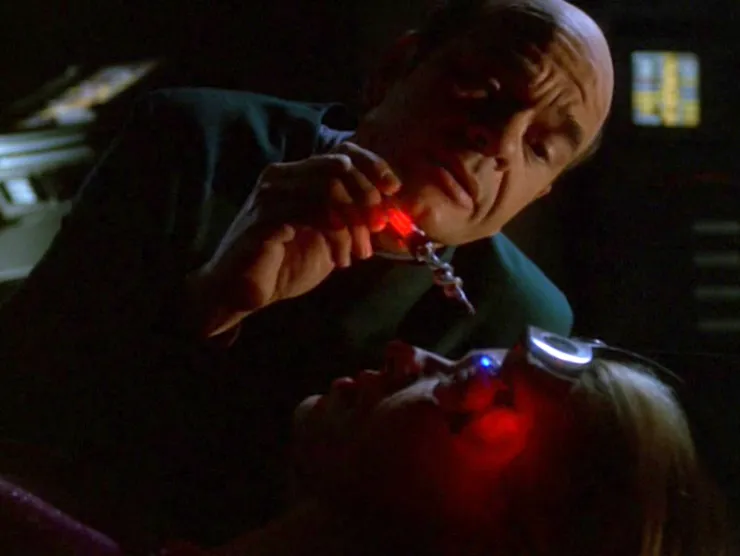
His morality removed, The Doctor is more amused than concerned, and as he works he manipulates Seven’s brain to make her sing for his enjoyment. There, deep within the dark and crumbling bowels of the Equinox, as The Doctor slowly murders his student and best friend, they sing “My Darlin’ Clementine” as a duet. Disturbing doesn’t begin to cover it.
Star Trek: Voyager’s Best Episode Is Almost A Movie
“Equinox” parts 1 and 2 are brilliantly directed by David Livingston who treats it as though he’s in the middle of an epic feature film, instead of a franchise television show of sometimes questionable merits. He weaves the crews of both ships into his story almost seamlessly, everyone playing a pivotal role in the complex narrative that’s about to unfold.
By the time this Star Trek: Voyager episode is over, nothing’s left undamaged. Bulkheads have exploded, relationships have imploded, and not everything that happens here will be forgiven. John Savage, guest starring as Rudy Ransom, chews scenery as a conflicted mass murderer on the edge.
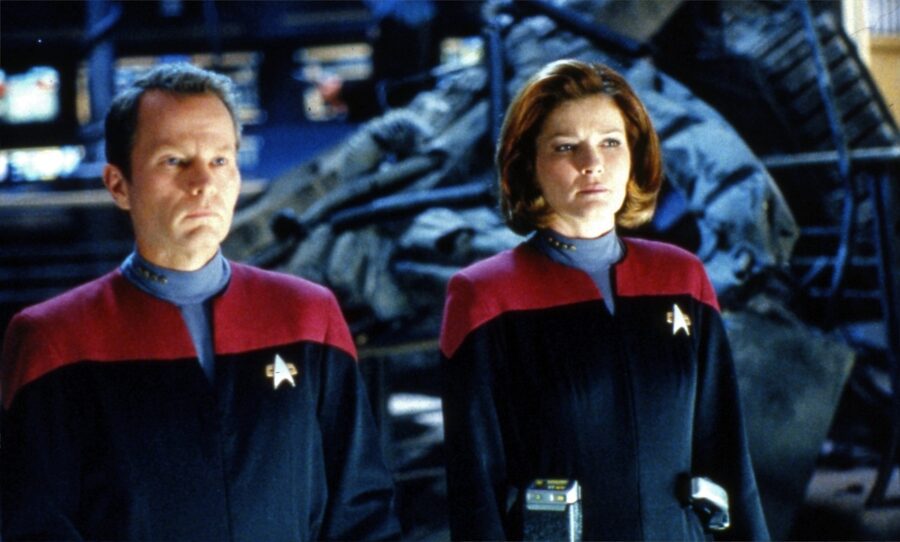
When people talk about Star Trek: Voyager, Season 4’s “Year of Hell” is usually credited as the series’ best episode. The truth is actually this: “Year of Hell” is the place where Star Trek: Voyager first started to take risks.
Though the show remained utterly inconsistent, “Year of Hell” was a new beginning, a symbol of a rediscovered willingness to push things beyond Voyager’s often stuffy, static parameters. That risk-taking mindset didn’t last all seven seasons, but it peaked at the end of Season 5, resulting in this cliff-hanger two-parter called “Equinox”.
“Equinox” isn’t just Star Trek: Voyager’s best episode, it’s one of the show’s most haunting adventures, a brief glimpse into what Voyager might have been, if they’d always been this willing to take it to the edge. That glimpse into what might have been is why “Equinox” deserves to be Star Trek: Voyager’s best episode.