12

Space Elevator Planned By 2050 In Japan

I think all of us growing up were intrigued by Willy Wonka’s mysterious glass elevator that could seemingly take you wherever you wanted to go, even if that meant crashing through the roof and into the sky. Of course in the world of sci-fi, elevators have frequently taken people beyond Wonka’s ambitions and into outer space, and now Obayashi Corp out of Tokyo is hoping to do the same.

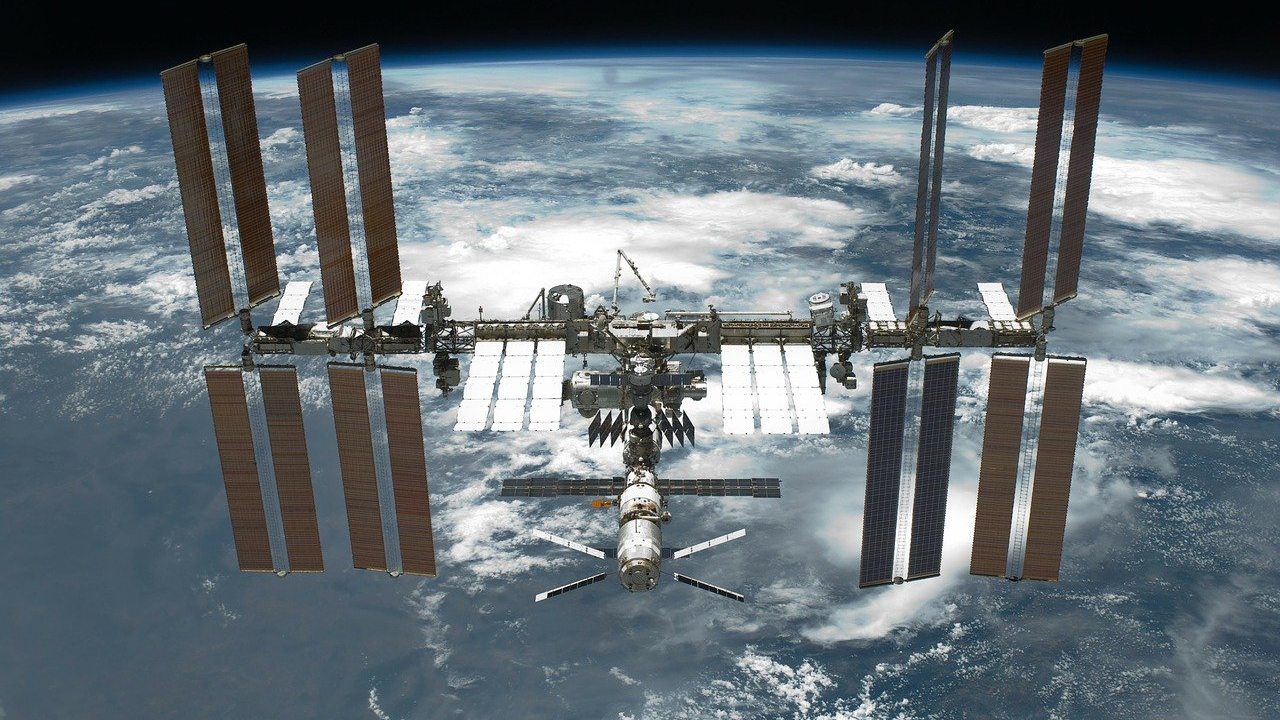
According to Space.com, a plan has been proposed by the Japanese company to build an elevator that would take passengers out of our atmosphere and drop them off at a space station situated in low Earth orbit. With a max speed of 124mph, it would take the vehicle over a week to reach its destination nearly 22,000 miles away. It does not mention what kind of accommodations the maximum of 30 passengers will experience while on the way up, expect something a little more homey than what you get on a Southwest jet, but the space station itself will provide living quarters and laboratories for them to live and work once they’ve completed their journey.

The biggest problem Obayashi is running into is the cost of the 66,000 mile cable that will be needed for the vehicle to run on. Extending three times farther than the station itself, the extra long cable will be capped with a counterweight that will act as an anchor in space to help stabilize the unit. Unfortunately, the proposed material to build the cable, called carbon nanotubes, costs much more than can be considered financially effective. However, their proposal doesn’t put completion of the elevator until 2050, leaving plenty of time for development costs of the material to come down.

At first glance, hell, even at second and third glance, this kind of project seems like the insane ramblings of an eight-year-old who has read too many sci-fi stories. But the actual application of something like this could actually be a very cost effective way to keep the space program active without having to deal with expensive and incredibly dangerous launches that strap astronauts to thousands of tons of volatile gasoline. Sure, taking nearly a week to get 30 passengers to the station is longer than it would take to just blast them up there on a shuttle, but the amount of money saved would be huge since the long cable and magnetic rail system will negate the cost of fuel.

As crazy as this sounds, Obayashi’s space elevator project could be a very interesting development in our journey to deep space, and they’ve intrigued NASA into supporting it. And hey, anything that will get me into space sooner rather than later I am all for. More on this as the project slowly but surely develops.

Comments

  • Mark Cofta

    I’d like to meet an eight-year-old who’s read too many science fiction stories. Or any, for that matter.

    Seriously, though, this is fascinating. But wouldn’t the elevator car still require an enormous amount of thrust to escape earth gravity? Being tethered to a cable doesn’t negate the need for lift, right?

    • http://twitter.com/PandoranAge Chronos Productions

      The elevator car would grip strip of nanotubes and climb. A better option in my opinion are simple mass drivers buried, with an evacuation port on the side of a mountain, a really high mountain like say in Tibet. The thing gets up to escape velocity underground in an vacuum tube. As it approaches the evacuation port a plasma pulse is fired clearing air resistance and the thing follows the pulse up and out.

    • http://twitter.com/DeepSpacer Brian Williams

      No extreme trust is necessary for this mode of travel. Think of it this way, in human terms the difference between a space elevator vs. a rocket is the same as trying to jump to the top of the Empire State Building and just climbing the stairs to the top.

    • Vanevar

      You can recover a lot of the energy from a descending car soif you send them up and down in pairs it can be pretty energy efficient, especially if the descender is loaded with meteoroid iron. Incidentally if you make your nanotubes from atmospheric carbon or any non fossil source this is one hell of a CO2 sequestration project

  • Alex Avriette

    Um volatile gasoline? Surely you mean ammonium perchlorate, LOX, and LH2, right?

  • http://twitter.com/polyGeek polyGeek

    It isn’t really a cost issue with the Carbon nano-tube material. It’s an issue that it can’t be mass produced in quantities sufficient to make the cable. Many research teams around the world are working hard on this problem. Assuming that it is physically possible, which seems likely, the nano-tube production issue could be solved way before 2050.

    There are still many technical hurdles to get over before a space elevator can be built but that’s the biggie.

    @Mark Cofta: The elevator would pull itself up the ribbon. So no it doesn’t need to climb fast. But I’ll wager that it’ll climb a lot faster than 124 mph.

  • heronymo

    Can’t they just put that money into R&D for small shuttles like Star Trek? lol

  • Subsplot

    First off, LEO’s end at an altitude of 1700 above Earths surface. In fact an orbit of 22,000 miles puts this thing about 1500 miles from the moons orbital plane, so they’re gonna have to be real careful where they put that extra 40,000 miles of cable. Quite why they can’t just put it at the La Grange point where the pull of the earth and the moon cancel each other out thus stabilizing anything put here is beyond me.

    Secondly why has a vehicle that has a proposed propulsion system that is very close to the bullet train only got a top speed of 124mph, I can understand that while it’s pulling away from earth’s initial gravity and is building up momentum, but once it’s beyond our atmosphere where it has no friction or drag and where the pull of gravity is constantly getting weaker it should be able to accelerate to much higher speeds. Better had be able to do because on the way down gravity’s gonna take over and it’ll reach terminal velocity all on it’s own and with this sort of design the propulsion is also the brakes so you need engines capable of accelerating and decelerating beyond the target of terminal velocity just to stop your self from pancaking when you hit the bottom.

    • http://twitter.com/ChrisBowlesAnim Chris Bowles

      Pretty sure the moon is about 200,000 miles away which leaves a lot of space for cables and things.

      The La Grange points move as the moon goes round the Earth, so having the elevator anchored to the Earth and sitting in the La Grange point would rip it apart.

      In fact, there are many other plans to site a future space station in one of the Earth/Moon La Grange points which is something to look forward to.

  • http://twitter.com/DeepSpacer Brian Williams

    There has been tons of talk of space elevators over the years and a lot of people actively work on making it a reality, but I just don’t see it happening. We are decades upon decades away from being able to produce nanotubes in the quantity they need for this to become a reality.

  • Idiot

    Will LeBlanc… thanks for writing this, I’m super pumped to hear about it, but you’re totally off when you describe it as the insane ramblings of an 8-year-old who’s read too much sci-fi. This is the freaking future and it’s going to happen. Just look at the reddit thread spawned from your article:
    http://www.reddit.com/r/scifi/comments/tzong/space_elevator_planned_by_2050_in_japan/

    Also, Arthur C. Clarke’s ” The Fountains of Paradise” is a little too advanced for an 8 year old.

  • UnRiel

    I like Arthur C Clarke’s solution in 3001: Final Odyssey, the final sequel to 2001. Clarke foresees buildings built on the equator so tall that the roof is above the atmosphere. The elevators would lift cargo and space craft to an altitude that reduces escape velocity but does not require on the counter weight design described in this article. I expect carbon nanotubes would still be critical building material. This solution provides almost unlimited facility for supporting residential, business and R&D apartments. The upper floors experience far decreased gravity which have applications for laboratories, manufacturing and future looking hospitals that benefit from zero G, citizens that will better thrive in lower gravity such as paraplegics and other infirm but otherwise mentally healthy people. Whole floors (there will be thousands) can be dedicated to hydroponic farms. Once above clouds, access to uninhibited sunlight increases the ability to employ sustainable solar energy collection and the need to dig deep foundations would allow for respective geothermal energy collection. Mirrors and lenses would improve hydroponic crop yields so the building would have some local ability to sustain food production. Wind capture for electricity production could also be a feature though vibration absorption would be critical; it would be critical anyway because of natural wind and storm endurance.


    I think this is a far superior idea to the space elevator. If we develop the material that can support the elevator, the same material could possibly support a 3001 type building.